Can I Claim Insurance for OEM Parts
You can usually claim OEM parts only if your policy specifically promises them or your state requires them for a car as new as yours.
It comes down to your policy wording and your state's rules
Insurers write repair coverage around cost control. Their default language usually allows parts that are not from the original manufacturer, as long as the repair shop says the part fits and functions properly. For an EV, that default often does not sit well with you, because battery housings, sensors and structural panels are not interchangeable the way a bumper clip might be.
Some states step in here and require insurers to use OEM parts on newer vehicles, or to get your consent before using an aftermarket part. Other states leave it entirely to the contract. This is exactly the kind of thing that varies, so you need to check your state's rules and read your policy's parts clause rather than assume either way.
Even where aftermarket parts are allowed, insurers will often agree to OEM parts if the repair shop documents that no safe aftermarket equivalent exists. This comes up a lot with battery packs and the electronics around them, since there is rarely a non-OEM version that a shop will certify as safe. Your leverage is strongest when the shop itself pushes for OEM parts on safety grounds, not when you ask for it as a preference.
The other factor is whether you added an endorsement for OEM parts when you bought the policy. Some insurers sell this as an optional add-on precisely because the base policy does not guarantee it. If you did not add it, you are relying on your state's law or the shop's safety argument, and neither is guaranteed to go your way.

What actually decides if you get OEM parts
- Your policy's parts clause This is the actual contract language on repairs, not what an agent told you. Read it or call and ask them to read it to you directly.
- State parts laws Some states require OEM parts on newer vehicles or require your consent first. Check your state's insurance department site for the rule.
- OEM endorsement on your policy This is a specific add-on some insurers sell that guarantees OEM parts. If you didn't buy it, don't assume you have it.
- Shop's safety documentation A shop that documents no safe aftermarket part exists can often get the insurer to approve OEM anyway. Ask your shop to push this in writing.
- Which parts are in question Battery, structural and sensor parts get more OEM leeway than trim or glass. Ask the adjuster part by part, not for the repair as a whole.

Compare quotes that specify OEM parts coverage in writing, so you're not relying on a verbal promise after an accident.

Should you add an OEM parts endorsement now
If you do
You pay more upfront, but after a crash the insurer must use original manufacturer parts for your repair. For an EV this matters most on the battery, sensors and body structure, where a wrong-fit part can affect safety and resale value. You stop worrying about what the adjuster decides later.
If you don't
You rely on your state's default rules and the shop's judgment after a crash. In states without strong OEM protections, the insurer can approve aftermarket parts if a shop says they fit and function, even on major EV components. You may end up negotiating mid-repair, which can slow things down and leave the outcome uncertain.

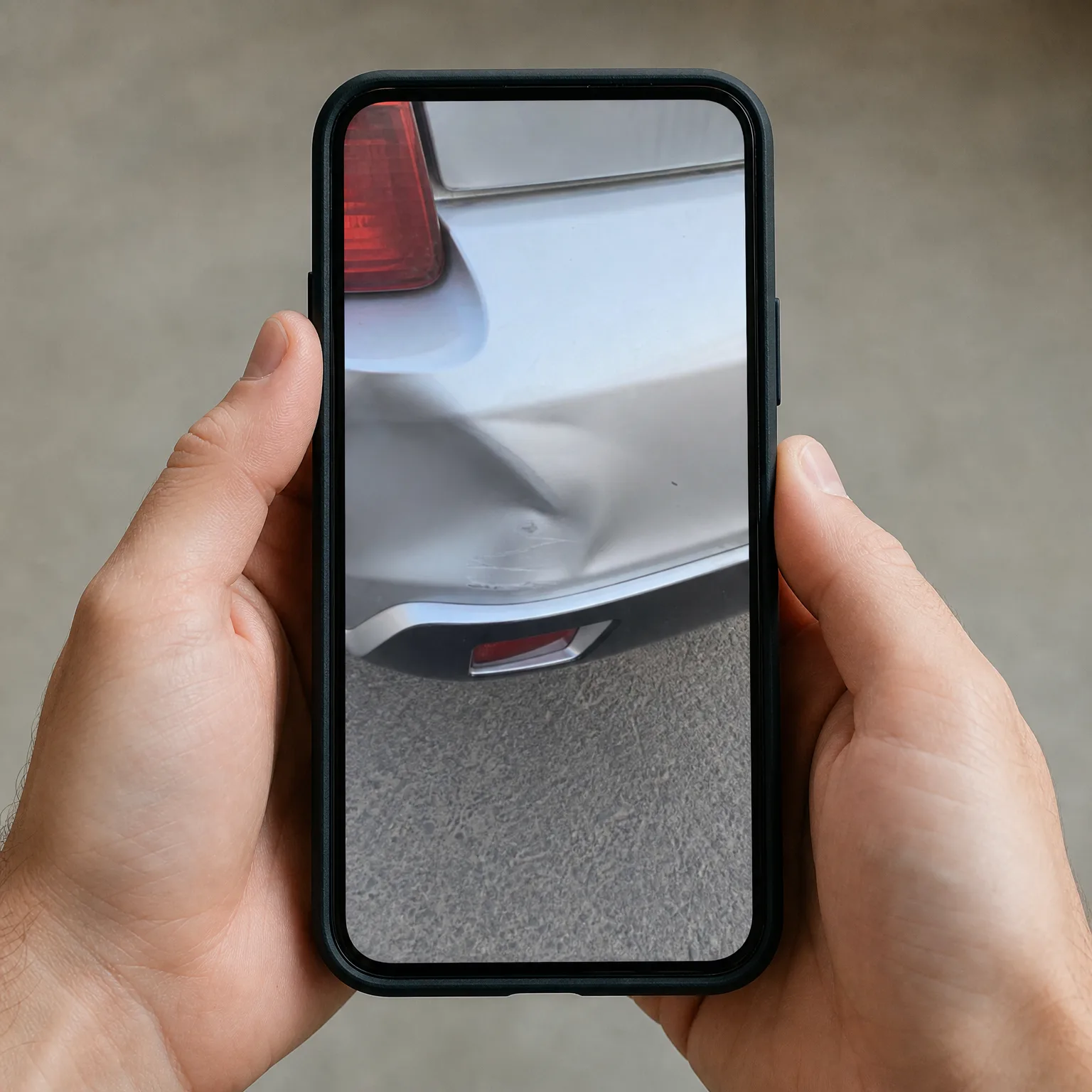
A fender bender that touched the battery housing
You get rear-ended at low speed, nothing dramatic, but the shop opens the car up and finds the impact reached the edge of the battery housing. The shop tells your insurer that no aftermarket replacement exists for that specific housing and that fitting anything but the OEM part risks a seal failure. The adjuster initially pushes back, citing the policy's standard parts clause, until the shop puts the safety concern in writing.
Because the documentation specifically named a safety risk rather than just a preference, the insurer approved the OEM part for that one component, while still using a non-OEM bumper cover for the cosmetic damage. The repair took longer because the OEM battery housing had to be ordered directly from the manufacturer, but you ended up with a repair you trusted. You did not have an OEM endorsement on your policy, and the outcome came down entirely to the shop's documentation and your state's consent rule, not your preference.
Your parts coverage lives in the fine print, not in what you assume a 'good' insurer would do.